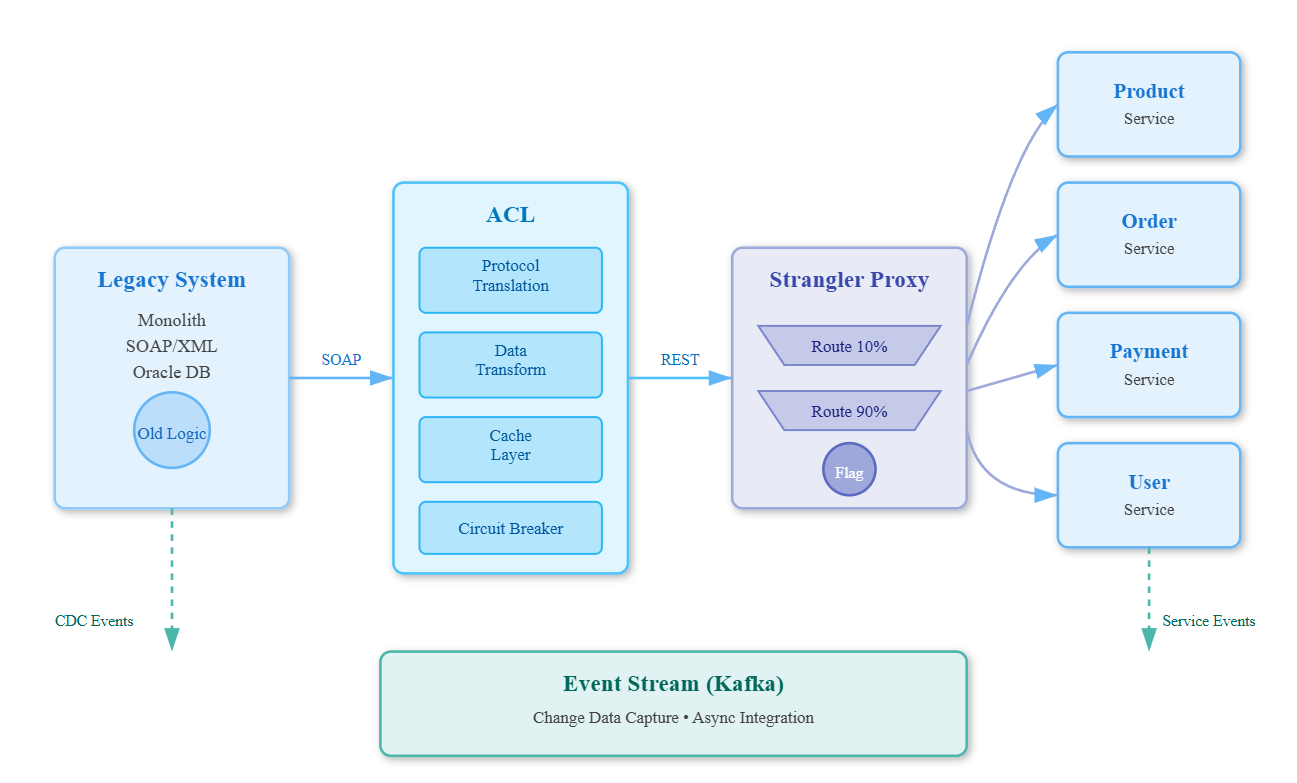
Legacy System Integration Patterns
Introduction
When Stripe migrated their payment processing from a monolithic Ruby system to microservices, they couldn’t afford a single minute of downtime. Their solution? They ran both systems in parallel for 18 months, gradually routing traffic through an anti-corruption layer. This isn’t just a migration story—it’s a masterclass in legacy integration patterns that every engineer will face.
The Real Problem Nobody Talks About
Legacy systems hold 80% of enterprise data but use protocols from the 1990s. The naive approach—”let’s rewrite everything”—fails 67% of the time according to Gartner. Why? Because rewrites ignore the hidden business logic accumulated over decades. Netflix learned this when migrating from their datacenter to AWS: they spent 7 years running hybrid infrastructure, not because they were slow, but because careful integration prevented revenue loss.