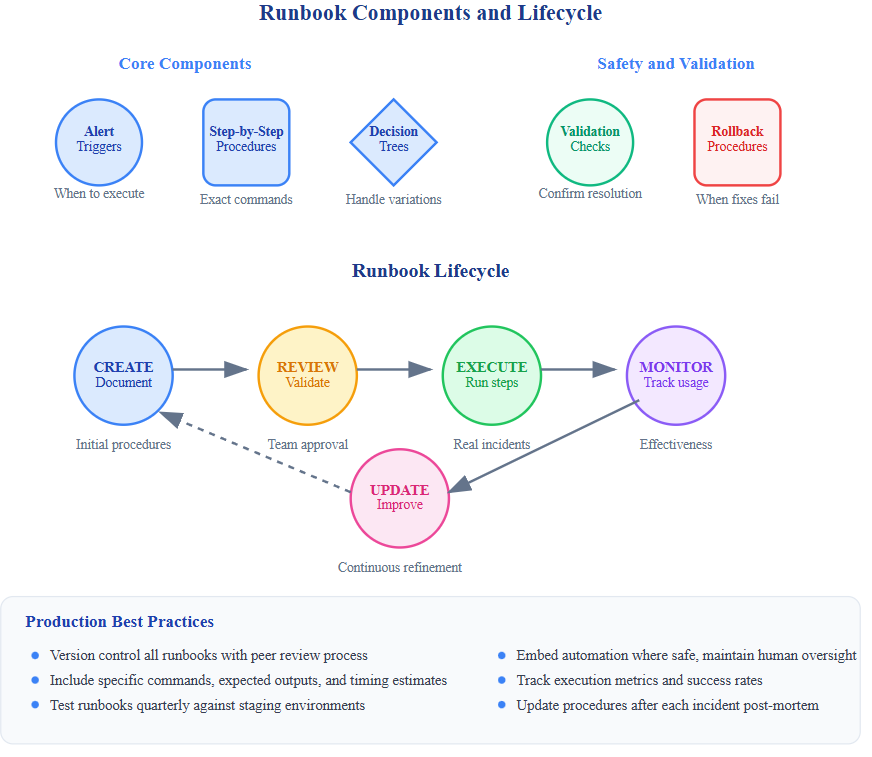
Runbooks: Standardizing Operational Procedures
Issue #131: System Design Interview Roadmap • Section 5: Reliability & Resilience
Working Code Demo:
What We'll Learn Today
Transform chaotic incident response into predictable, repeatable procedures
Design runbooks that scale from startup to enterprise-level operations
Integrate runbooks with automation systems for faster incident resolution
Build a production-ready runbook management system with real-time execution tracking
The 3 AM Phone Call That Changed Everything
Imagine you're awakened by an alert: your payment system is down, affecting thousands of transactions. Your drowsy teammate starts frantically Googling last month's similar issue while customers flood social media with complaints. This exact scenario cost one e-commerce company $2.3 million in revenue during a Black Friday outage.
The difference between companies that recover in minutes versus hours isn't technical superiority—it's having standardized operational procedures that anyone can execute under pressure. Welcome to the world of runbooks: your system's instruction manual for surviving chaos.
Why Traditional Documentation Fails Under Pressure
Most teams confuse runbooks with generic documentation. Traditional docs explain what systems do; runbooks prescribe how to respond when systems fail. The distinction becomes critical when your database is throwing connection errors at 2 AM and your senior DBA is unreachable.